The Sound and Fury of a Collapsing Order
:As Trump’s Power Wanes, a Window Opens for Change


In the waning phase of Donald Trump’s reign, opportunities will open up for profound social change. Here, we explore the nature of the difficulties besetting his administration and propose a few starting places for those who aim to do more than simply replace him with another politician.
In less than a year and a half, Trump has completely used up the advantages with which he began his second term. He has passed from appearing unstoppable to flailing pathetically. Obsessed with presenting an image of strength, Trump is indeed—as Shakespeare put it—a poor player whose hour upon the stage will soon reach its end. The stream of falsehoods and threats issuing from his administration can be seen for what it is: a tale told by an idiot, full of sound and fury, signifying nothing.
The fiasco in Iran is already Trump’s second quagmire this year. He began 2026 with a more or less successful stunt in Venezuela—but only four days later, the murder of Renee Good supplanted it in the headlines. For almost three weeks, while Immigration and Customs Enforcement mercenaries brutalized and murdered people in the Twin Cities, the entire Trump administration brazenly lied in contradiction of widely circulating video evidence. Having created a situation in which they could not risk looking weak, Trump’s cronies attempted to dictate reality by fiat as more as more residents of the Twin Cities joined the resistance to the ICE occupation. Finally, facing plunging polling numbers and the prospect of recurring general strikes, the Trump administration was forced to change course, firing Border Patrol “Commander at Large” Greg Bovino and trying to get Trump’s signature policy (“the largest deportation operation in American history”) out of the news.
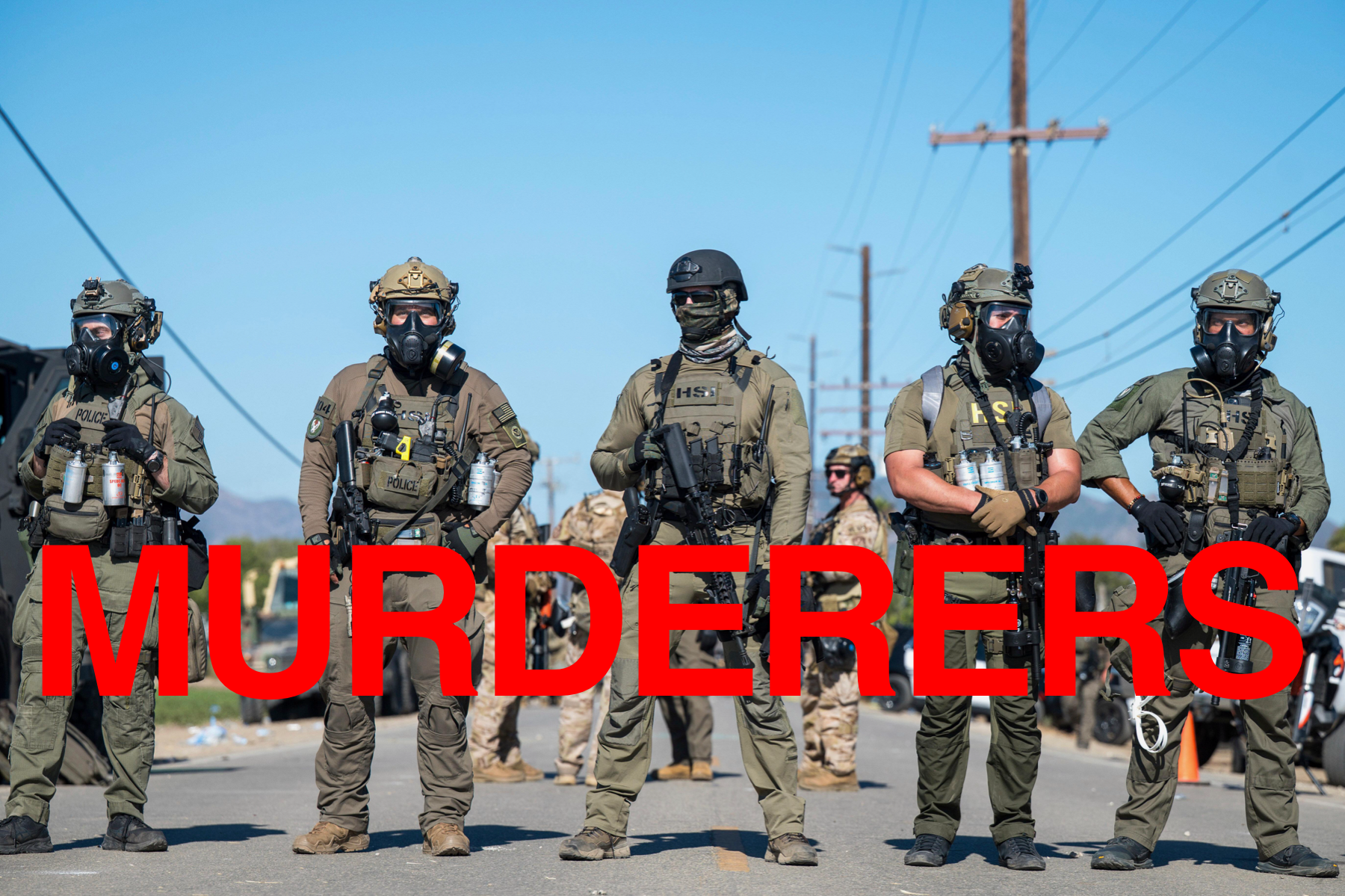
The mercenaries who serve the Trump regime have squandered any claim to moral authority.
Bovino’s departure set the stage for the departures of Homeland Security Secretary Kristi Noem and Attorney General Pam Bondi. The fact that Trump had begun his second term determined to avoid the continuous turnover of personnel that characterized his first underscores what a defeat this is for him. As his henchmen leave in disgrace, not only does that undermine the loyalty of his remaining underlings—who can see their own future in the ignoble fates of their colleagues—it also undercuts the narratives with which the departed lackeys sought to justify the administration’s deeds. Firing Greg Bovino and Kristi Noem is tantamount to admitting that the ICE operations in Los Angeles, Chicago, and Minnesota were simply ham-fisted attempts to terrorize the population of the United States into submission.
In invading Iran a month after firing Bovino, Trump sought to repair his image by repeating his apparent success in Venezuela. Instead, as in Minnesota, he stumbled into a debacle from which he has yet to extricate himself.
Everyone associated with the Trump regime is known now for continuous, pathological lying.
After continuously changing his talking points about the goal of the offensive throughout March, Trump sought to bring the conflict to a conclusion at the beginning of April by threatening massive attacks on civilian infrastructure—technically, a war crime. On April 6, Trump was still insisting that Iran’s ten-point proposal for a ceasefire was “not good enough.” The following morning, he declared “A whole civilization will die tonight,” terrifying many people into believing that he was threatening to use nuclear bombs—and perhaps unwittingly repeating the prophecy of the Oracle of Delphi, who told Croesus that if he went to war, “a great empire would fall,” not specifying that it was Croesus’s empire.
An hour and a half before his own self-imposed deadline, Trump announced that, in dialogue with the Prime Minister of Pakistan—not with any representative of the Iranian government—he had arrived at a ceasefire, calling the ten-point proposal he had previously rejected a “workable basis” for negotiations.
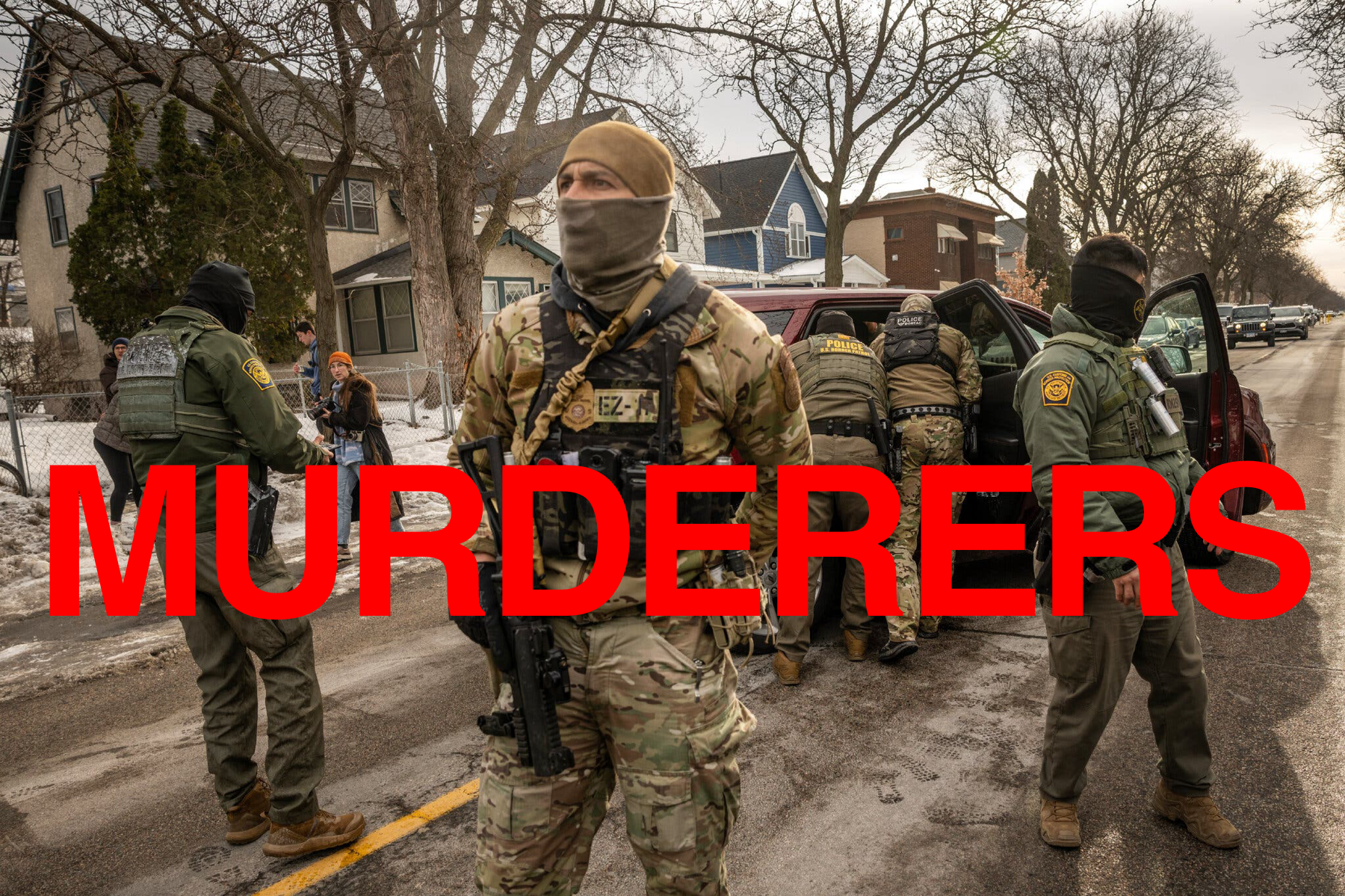
From Minnesota to Iran, Lebanon, and Palestine, they have nothing to offer but death and destruction for the enrichment of a few tycoons.
The Prime Minister of Pakistan affirmed that the United States, Iran, and all of their respective allies had “agreed to an immediate ceasefire everywhere including Lebanon.” Yet the next day, the Israeli military was still attacking Lebanon, and in response, Iran continued to close the Strait of Hormuz.
It’s hard to imagine a worse outcome for Trump. He has achieved none of his express objectives in Iran, neither regime change nor suppressing Iran’s nuclear program. He no longer appears to be a credible negotiating partner. Both his threat to target civilian infrastructure and his claim to have negotiated a ceasefire have been revealed to be hollow. Neither the Iranian nor Israeli governments are adhering to the agreements he claims to have arranged. He is forced into tension with Israeli Prime Minister Benjamin Netanyahu, while the pressure on the global economy continues unabated.
It remains unclear whether Trump was ever seriously considering a massive strike on civilian infrastructure—or even a nuclear strike—or if he was simply making empty threats for its own sake. Regardless, having to spend a day wondering if he would deploy nuclear weapons drove home for millions of people how dangerous it is to live under a senile autocrat—and at the same time, it did not make Trump any more frightening to his enemies. He appears at once volatile and weak.
Whatever happens next in Iran, the back-to-back defeats in Minnesota and the Middle East mark another turning point for the Trump regime.
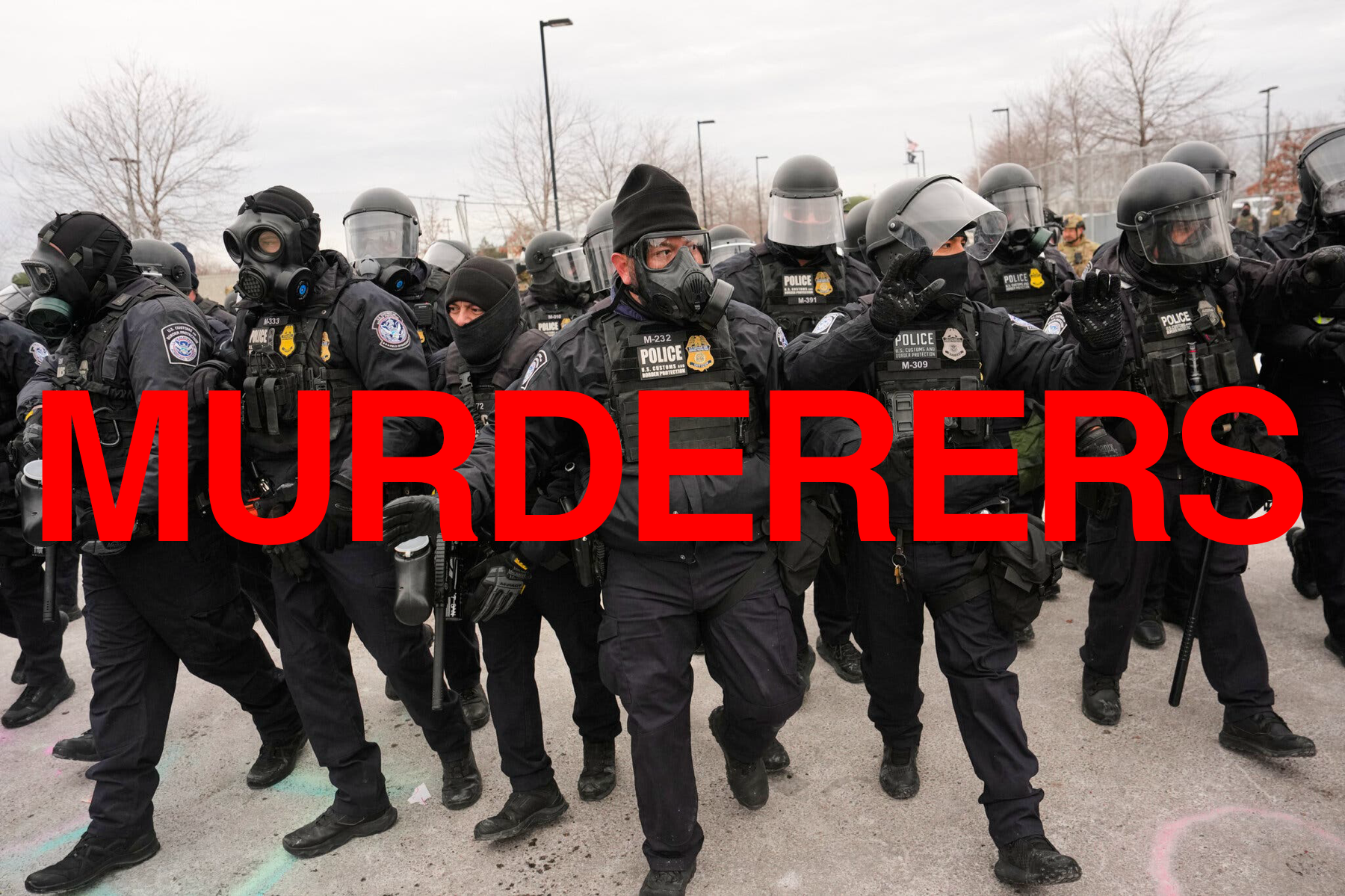
Stupidity Armed
When Trump won the 2024 election, many of the debates about how to respond hinged on the question of whether he and his colleagues were evil geniuses or witless beneficiaries of historical forces. Much of the paralysis engendered by his return to power centered around this question. Liberals warned that any kind of resistance would play into Trump’s hands, enabling him to declare martial law; centrists cynically took advantage of the situation to argue that the Democratic Party should adopt far-right positions on immigration. Scarcely seventeen months later, it’s almost impossible to remember, let alone comprehend, the extent to which his adversaries talked themselves into giving up without a fight.
The question has since been answered conclusively. Trump has one trick—pandering to what is basest in the most cowardly and hateful elements of society—which he repeats with inhuman consistency. In a social order that is itself debased, rewarding rapacious self-interest while punishing generosity and thoughtfulness, this strategy has gotten him far. But now he is hitting one wall after another.
Assembling a government on the basis of this strategy produced agencies filled with incompetent buffoons focused chiefly on cultivating a public image and competing for Trump’s favor. Conducting state policy on this basis has turned the majority of the population against ICE and even driven people back into the arms of the Democratic Party, one of the only institutions as unpopular as Trump.
One of the most characteristic gestures of the Trump era is willful dishonesty as a form of intentional transgression signifying strength. When Donald Trump proclaims easily-debunked falsehoods, his followers interpret this as an expression of boldness; they can demonstrate the intensity of their loyalty by proclaiming their belief in these falsehoods, just as Stalin’s henchmen did. But one cannot make military decisions on the basis of falsehoods—sooner or later, there will be consequences.
Most of Trump’s strength is comprised of the fear that he has inspired in people. His initial rapid successes, like Hitler’s blitzkrieg attacks of 1939–1941, were due to the weakness of his adversaries—politicians, executives, and administrators who, like Trump himself, are driven only by avarice and entitlement. Only after he and the mercenaries who serve him came up against real resistance did it become possible to gauge their true strength. As Mikhail Bakunin put it in a letter to Maria Reichel, “It is only in combat that we see what a person can do.”
Or cannot do.
The chief imperative driving the Trump administration’s decisions is the need to project strength. They have staked everything on building hard power rather than soft power, on intimidation rather than persuasion. Now that they have consumed most of their political capital, the field is opening up for others.
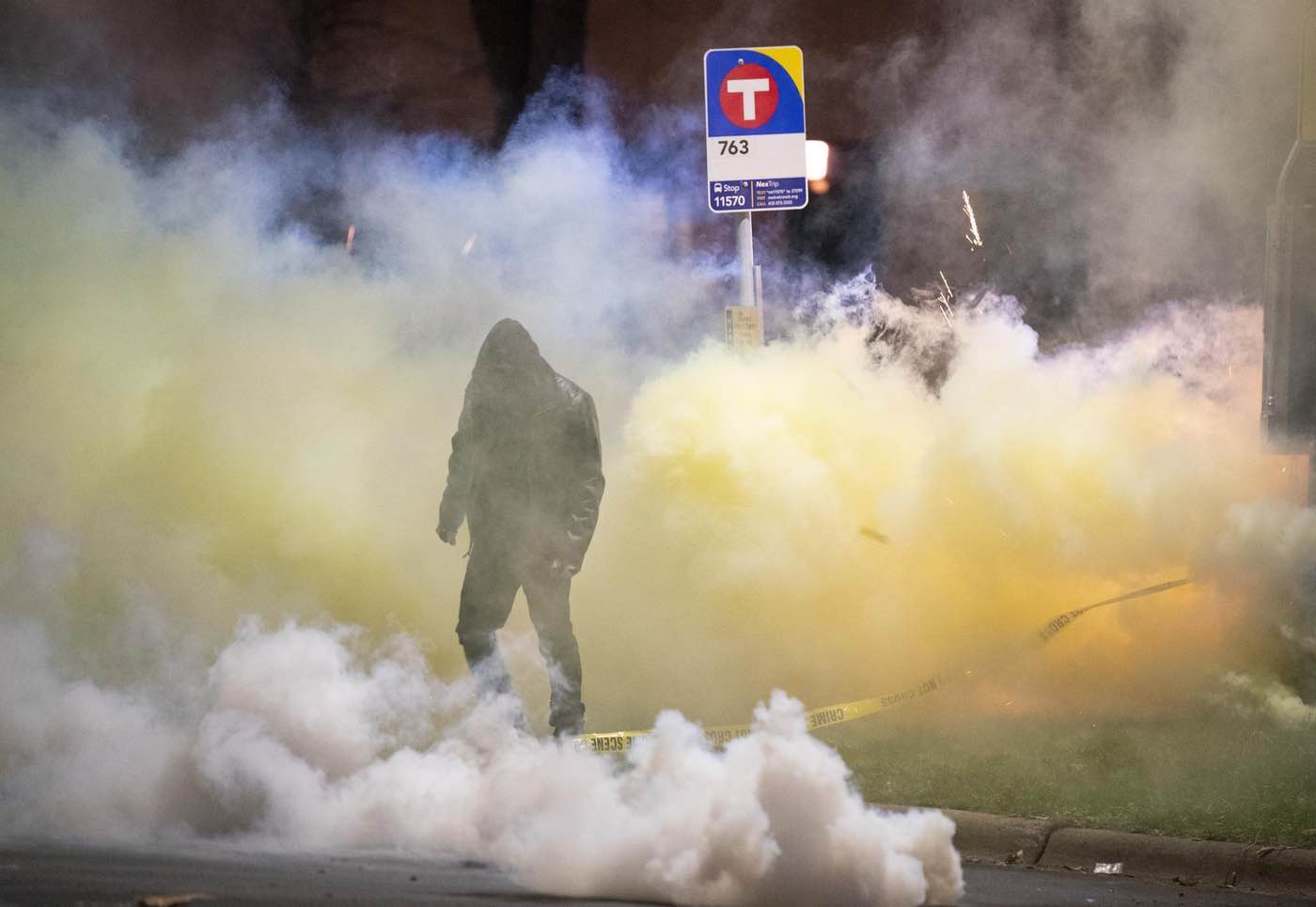
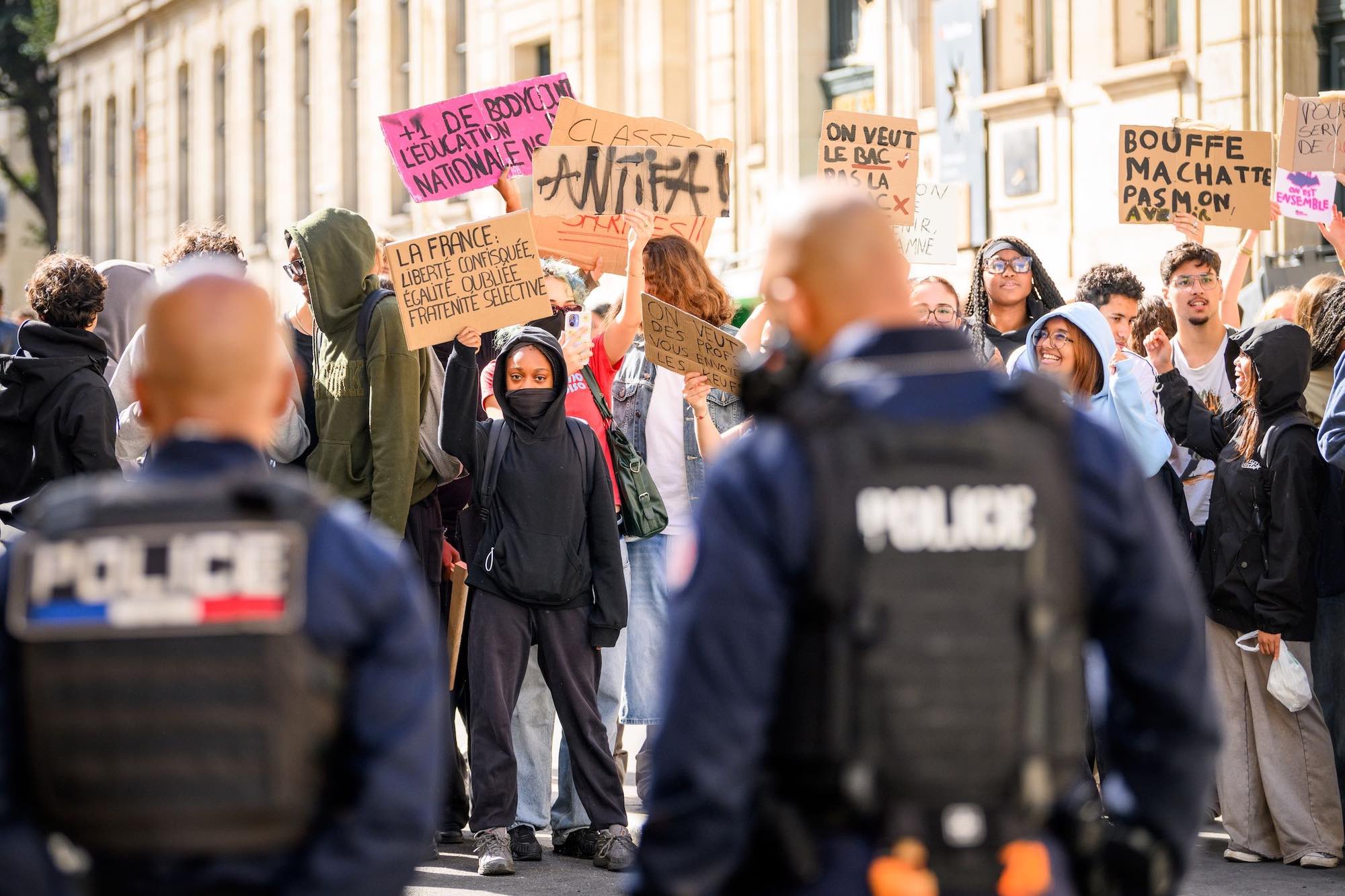
A demonstrator endures chemical agents in Minneapolis to stand up for what is best in humanity.
Now Is the Time
After living through the Prague Spring, Milan Kundera wrote that the ideal form of government is a crumbling dictatorship.1
All forms of government are based in hierarchy and violence. Political and economic inequality reinforce each other: the more wealth is concentrated in a few hands, the more vertical the political structures become, and vice versa. Yet this remains largely invisible so long as people perceive the governments that rule them as legitimate, or at least inevitable. Suffering alone does not make people desire change; people desire on the basis of what they are able to imagine. Only when a discredited regime begins to collapse—creating a tension between what people see around them and what they are able to imagine—do large numbers of people begin to ask questions about how they might wish to change the structure of the society.
Today, these questions are more urgent than ever, as the gulf between the haves and the have-nots widens and politicians cut away the safety nets and concessions that once offset the impact of capitalism on communities and ecosystems.
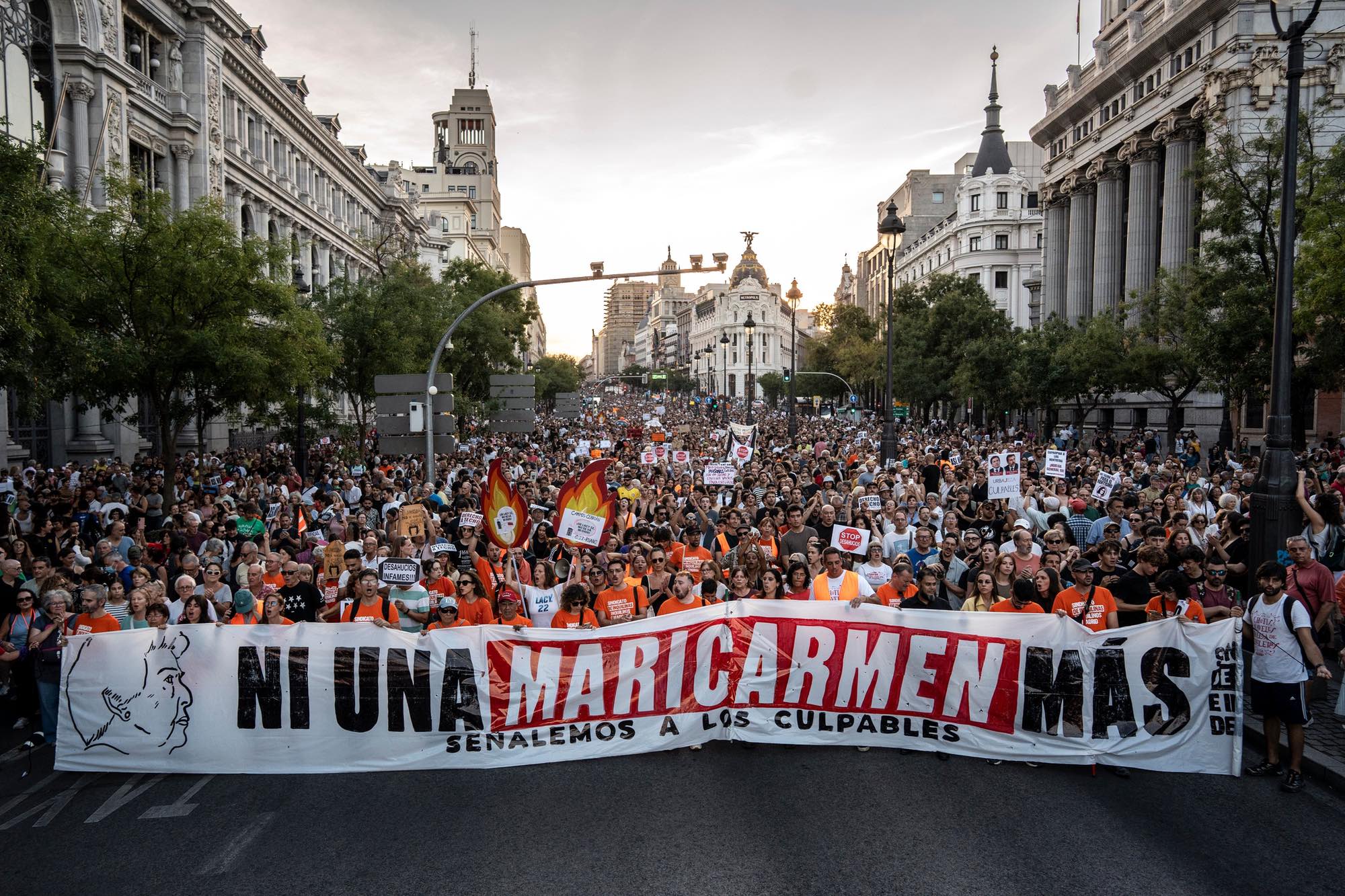
Right now, Trump is historically unpopular, with little prospect of his standing with the public improving. Yet he still has nearly three years in office ahead of him. For millions of people, Trump’s rise to power and the uselessness of the institutions that were supposed to control him are calling into question the entire political system. We can see this rage and radicalization emerging, however confusedly, among the rank-and-file participants in the massive demonstrations that have taken place over the past year.
This is an unprecedented opportunity for anarchists, abolitionists, and others who have concrete proposals to bring about structural social change. Right now, when no institutional forces are able to propose a solution to the problem, we should be making common cause across lines of difference, demonstrating the power of solidarity and the effectiveness of direct action, sharing what we have learned in the course of our efforts to resist the administration, and spelling out our vision of a better world.
This window of opportunity will not last long. The closer we draw to the 2026 midterm elections, the more people will be focused on electoral politics, including many of those who are currently participating in grassroots initiatives. We might be in a stronger position to address people at this moment than we ever will be again in the course of the Trump era.
Often, the moment of greatest danger—for example, when fascists or ICE agents are murdering people in Charlottesville or Minneapolis—turns out to have been, in retrospect, the moment of greatest possibility. By the time the terror has subsided and we recognize the potential of the situation, the moment is already passing.
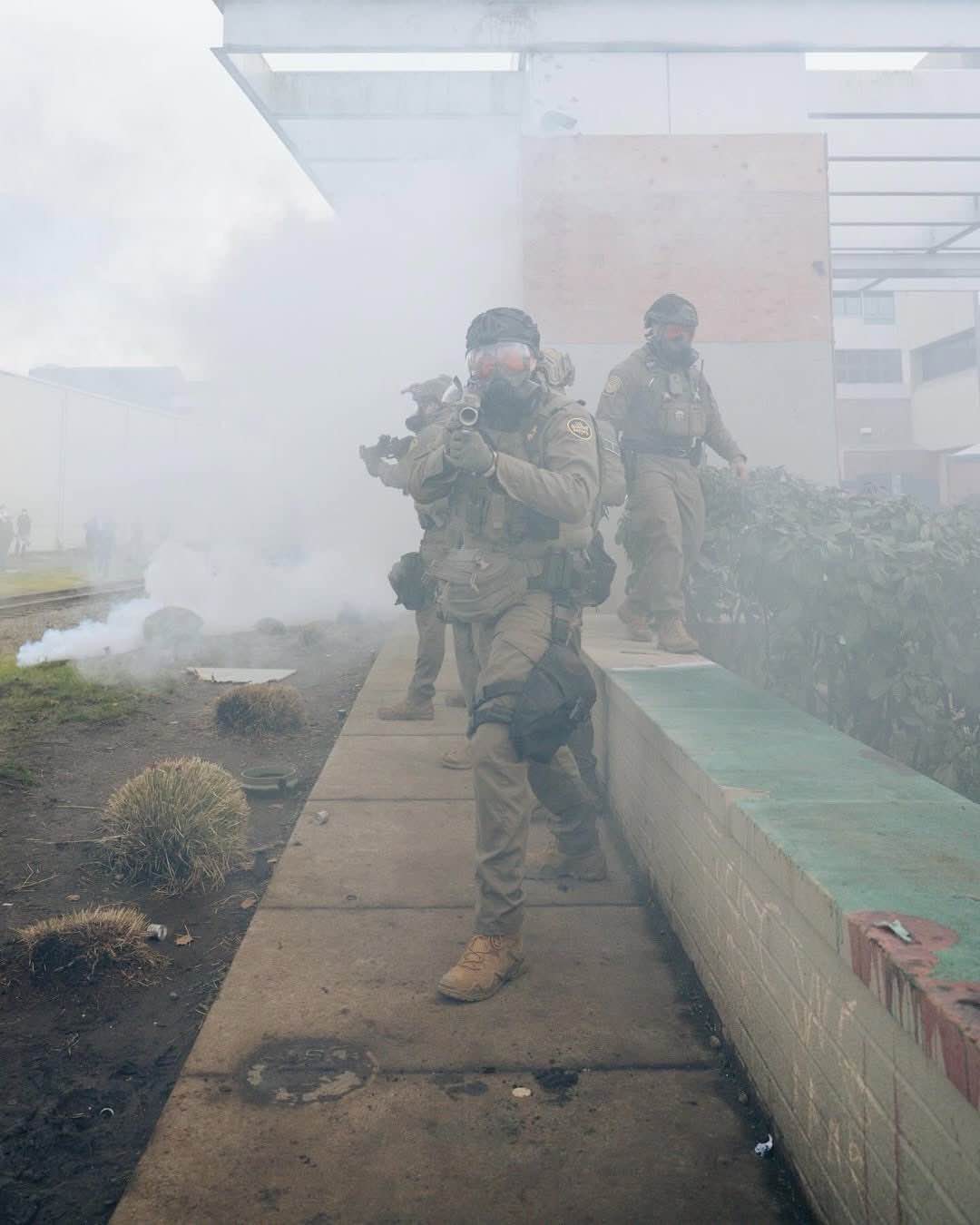
Federal mercenaries gratuitously assaulting people in Portland. No amount of brute force will suffice to subdue an increasingly desperate population.
We should remember this, because as Trump’s position weakens, he and his supporters will attempt more and more terrifying and outlandish schemes to maintain their grip on power. He and his adherents still have enough time to inflict a tremendous amount of suffering, both in the US and overseas. We should prepare for much more aggressive rounds of repression. Likewise, we have already seen that Trump will not leave office willingly.
In all likelihood, the outcome of the mid-term elections will be determined by what happens in the months ahead—not by how successfully politicians campaign, but rather, by the extent to which grassroots resistance makes it impossible for the ruling class to imagine that Trump could continue to advance their interests and the extent to which elements of the ruling class are able to regroup around other institutional forces, such as the Democratic Party.
As we plan for May Day and the summer, we should take a longer view. How will the tactics that we demonstrate during these events help to familiarize large numbers of people with the sort of tactics that they will need to employ alongside us to thwart Trump’s second attempt to carry out a coup? How will the narratives that we popularize position us to keep fighting against all the other proponents of capitalism and oppression after Trump is gone?
We should hurry to lay bare all the connections between fascists, billionaires, militarists, Zionists and Christian nationalists, cryptocurrency hucksters, tech moguls, corporate and social media platforms, federal agencies like ICE and the police and sheriffs that abet them, and the centrists and Democrats who paved the way for the tragedies of the second Trump era by suppressing grassroots resistance at the conclusion of the first. We should establish red lines within the opposition to Trump, making it unthinkable to promote or excuse any of these forces, showing how toxic the compromises with them have proved.
Here are some concrete goals that our movements could adopt:
-
Shut down all milquetoast proposals to make superficial reforms to ICE and the Department of Homeland Security, arguing instead for all-out resistance with the long-term goal of abolishing them. Those who have joined or remained in those agencies under Trump have shown their hatred for the rest of the population, making it clear that these institutions exist for the express purpose of serving autocrats. Those who have been imprisoned or deported must be permitted to rejoin their loved ones.
-
Connect the fight against ICE to the abolitionist movements against police and prisons. If Democrat politicians had not put so much effort into suppressing these movements between 2021 and 2024, social movements would have been much better prepared for the second Trump era, and the regime would have had fewer weapons at its disposal with which to impose control.
-
Organize to free prisoners and compel prosecutors to drop charges against defendants in all cases resulting from resistance to ICE and the Trump regime in general. We can build on the refusals of grand juries to indict and juries to convict those accused of resisting ICE. As it becomes apparent to more people that the law is a political instrument serving those who hold power rather than a neutral institution, many people will seek ways of addressing injustice that do not concentrate power in the hands of a Supreme Court comprised of extreme-right reactionaries.
-
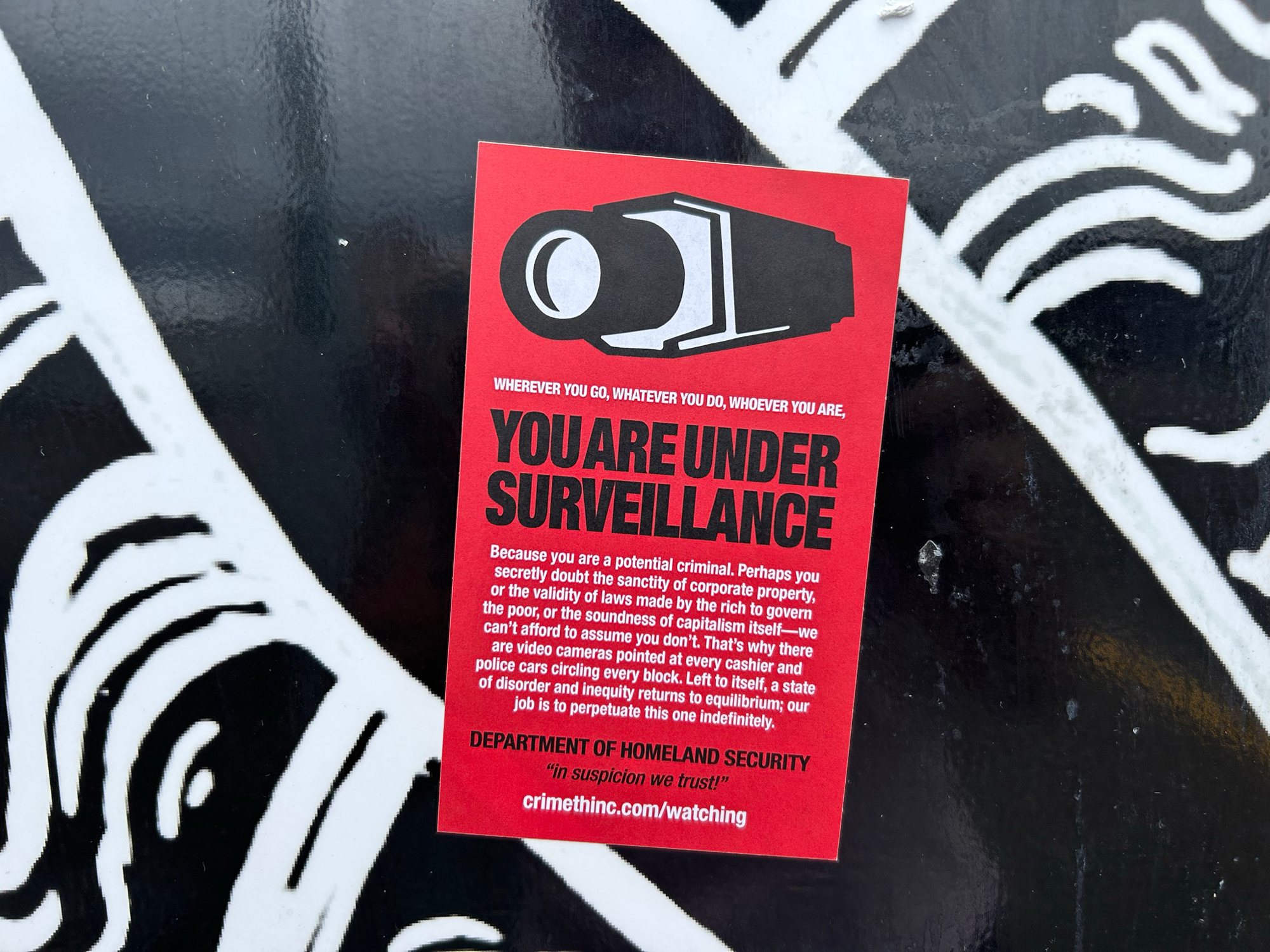
Connect the fight against Donald Trump to the fight against Flock cameras and data centers and—more generally—to the resistance to profiteering techno-fascists like Elon Musk and Mark Zuckerberg.
-
Channel anti-war organizing towards targeting arms companies responsible for the genocide in Gaza and the ethnic cleansing of Palestine.
-
Show that the ways that racism, misogyny, transphobia, and other forms of bigotry facilitate the cutthroat practices via which billionaires are impoverishing our communities.
-
Build mutual aid projects, grassroots education projects, and other forms of social infrastructure outside the state that cannot be gutted by government austerity measures or threatened by crackdowns on academic institutions and non-profit organizations.
The collapse of radical social movements at the end of 2020 is a cautionary tale. We must come out of the second Trump era stronger than we entered it. This is especially important because the real battles are only just getting underway. A wave of fascist political victories is looming in Europe, though if Trump is defeated soundly enough that may sap their momentum. Artificial Intelligence is only just beginning to drive massive numbers of people into unemployment while intensifying state surveillance and militarism.
As we have argued before, in the 21st century, when the state can do little to mitigate the impact of capitalism, state power is a hot potato that burns whoever holds it. The same conditions that are elevating far-right parties to power around the world are also rendering it difficult for them to hold onto control. But that goes for whoever will succeed Trump, as well: if Trump is driven from office, his base will split into Zionist and neo-Nazi factions, each more virulent than the last generation of Republicans, while whatever administration succeeds him will also provoke anger and disillusionment—likely mobilizing a new wave of momentum from the far right. If what happened under the Biden administration recurs, the backlash next time will be more horrific than anything we can imagine. This is why we must address the problems that capitalism is creating at the root, not simply protest its most noxious figureheads.
We must make sure that it is easy for everyone to distinguish our grassroots projects from any government that holds power, and continue to expand and deepen them regardless of whether there is an incompetent demagogue propelling people into the streets. As we have learned over and over—sometimes through courage, sometimes through cowardice—it is safer in the front.
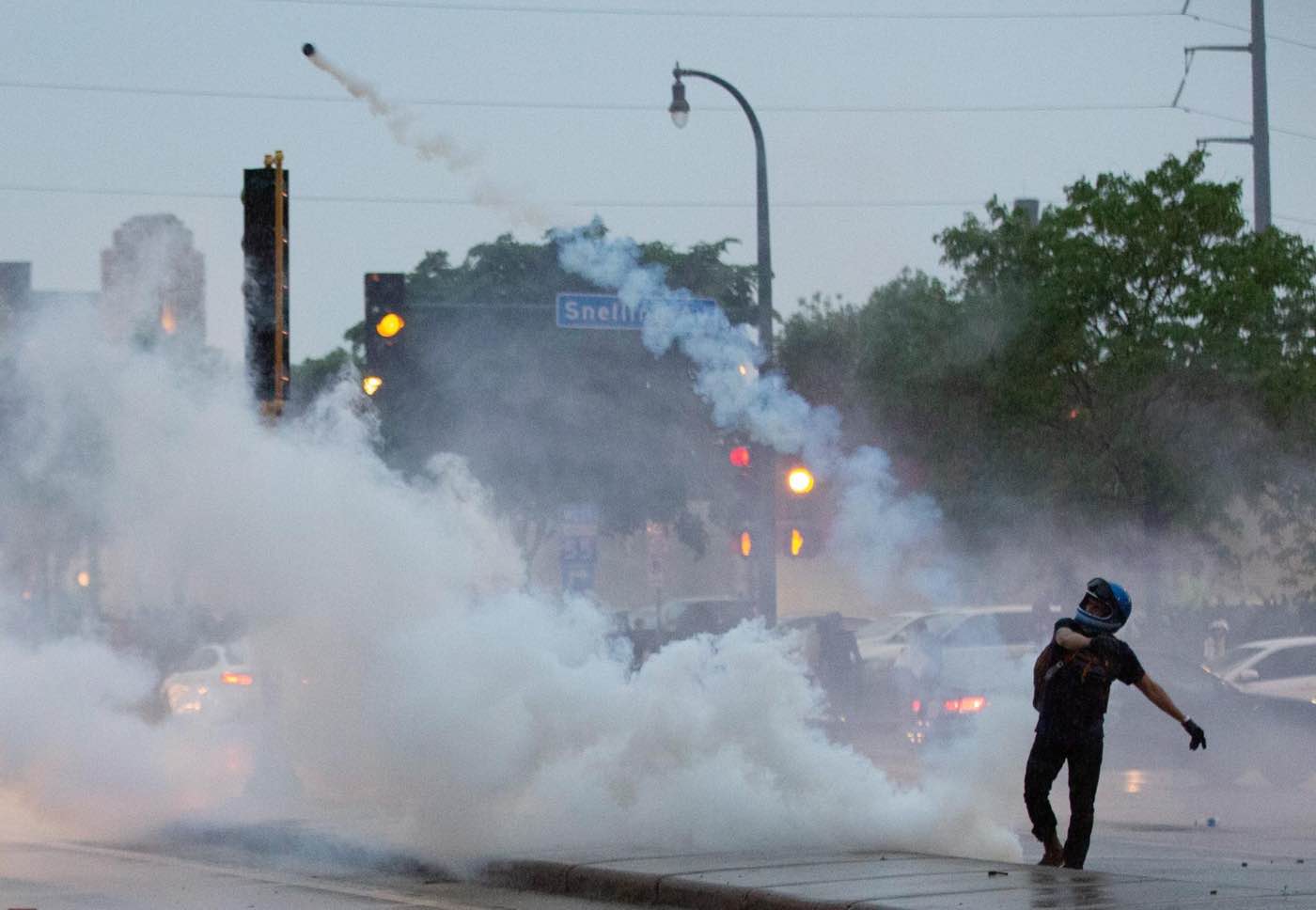
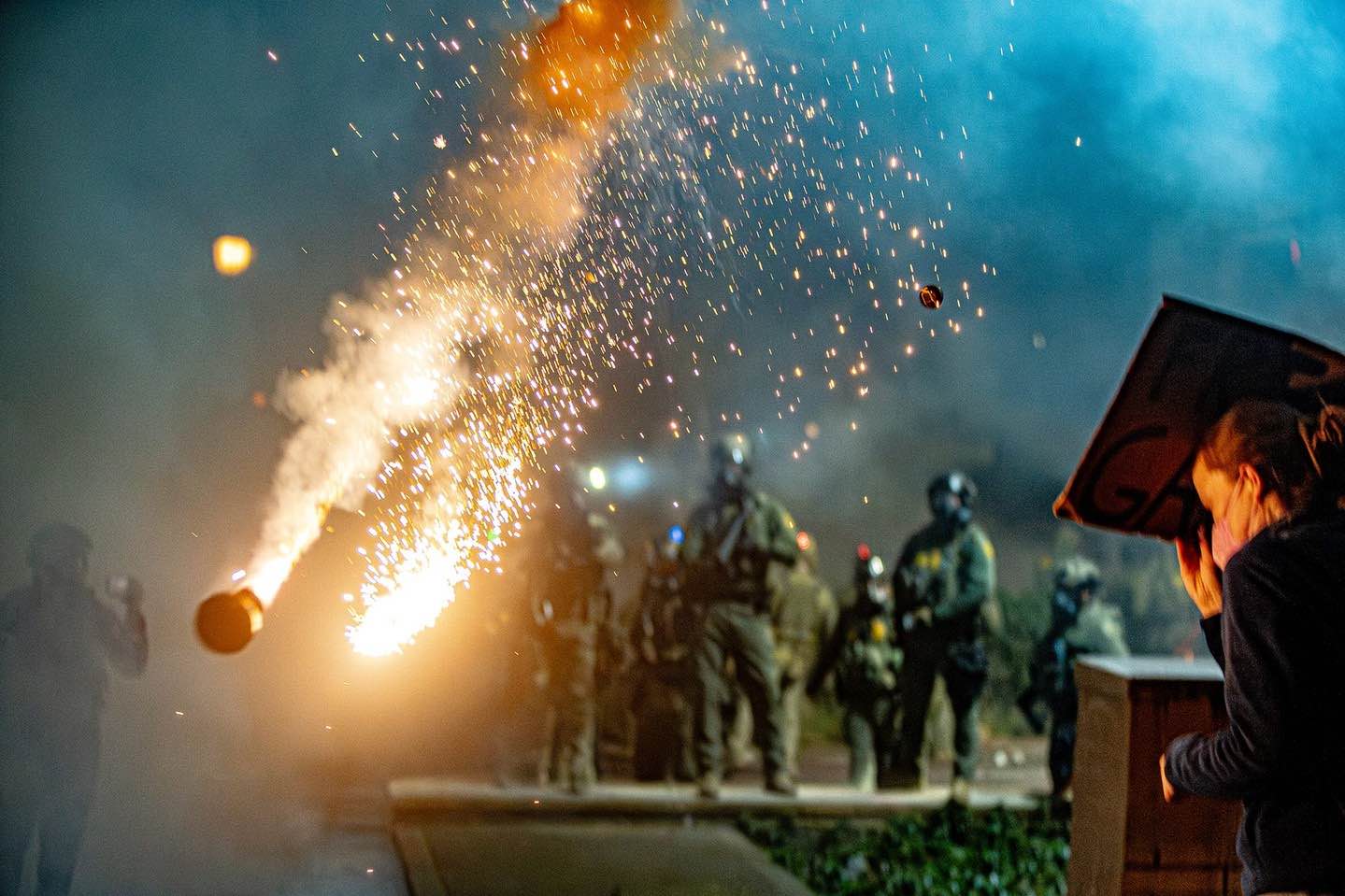
A demonstrator returns a tear gas canister to the murderers who shot it during the demonstrations in Minneapolis in May 2020 in response to the murder of George Floyd.
Appendix: On Stupidity
In this text, when we speak about stupidity, we do not mean a lack of natural aptitude, but rather the question of whether one chooses to make use of one’s aptitudes or to actively suppress them. By now, it should be apparent to all that the people who paved the way for Trump’s rise—many of whom are strangely obsessed with the idea that they possess natural aptitudes that others do not—have been willfully, obstinately refusing to see what is right in front of their faces. Stupidity, in this sense, is not an intellectual condition, but a moral failing.
No one puts this more clearly than the pastor Dietrich Bonhoeffer, who witnessed the rise of the Nazis:
Stupidity is perhaps less a psychological than a sociological problem. It is a particular form of the impact of historical circumstances on human beings, a psychological concomitant of certain external conditions. Upon closer observation, it becomes apparent that every strong upsurge of power in the public sphere, be it of a political or a religious nature, infects a large part of humankind with stupidity. It would even seem that this is virtually a sociological-psychological law. The power of the one needs the stupidity of the other. The process at work here is not that particular human capacities, for instance, the intellect, suddenly atrophy or fail. Instead, it seems that under the overwhelming impact of rising power, humans are deprived of their inner independence and, more or less consciously, give up establishing an autonomous position toward the emerging circumstances. The fact that the stupid person is often stubborn must not blind us to the fact that he is not independent. In conversation with him, one virtually feels that one is dealing not at all with him as a person, but with slogans, catchwords, and the like that have taken possession of him. He is under a spell, blinded, misused, and abused in his very being. Having thus become a mindless tool, the stupid person will also be capable of any evil and at the same time incapable of seeing that it is evil. This is where the danger of diabolical misuse lurks, for it is this that can once and for all destroy human beings.
Yet at this very point it becomes quite clear that only an act of liberation, not instruction, can overcome stupidity. Here we must come to terms with the fact that in most cases a genuine internal liberation becomes possible only when external liberation has preceded it. Until then we must abandon all attempts to convince the stupid person. This state of affairs explains why in such circumstances our attempts to know what “the people” really think are in vain and why, under these circumstances, this question is so irrelevant for the person who is thinking and acting responsibly.
-Dietrich Bonhoeffer, “On Stupidity” in Letters and Papers from Prison
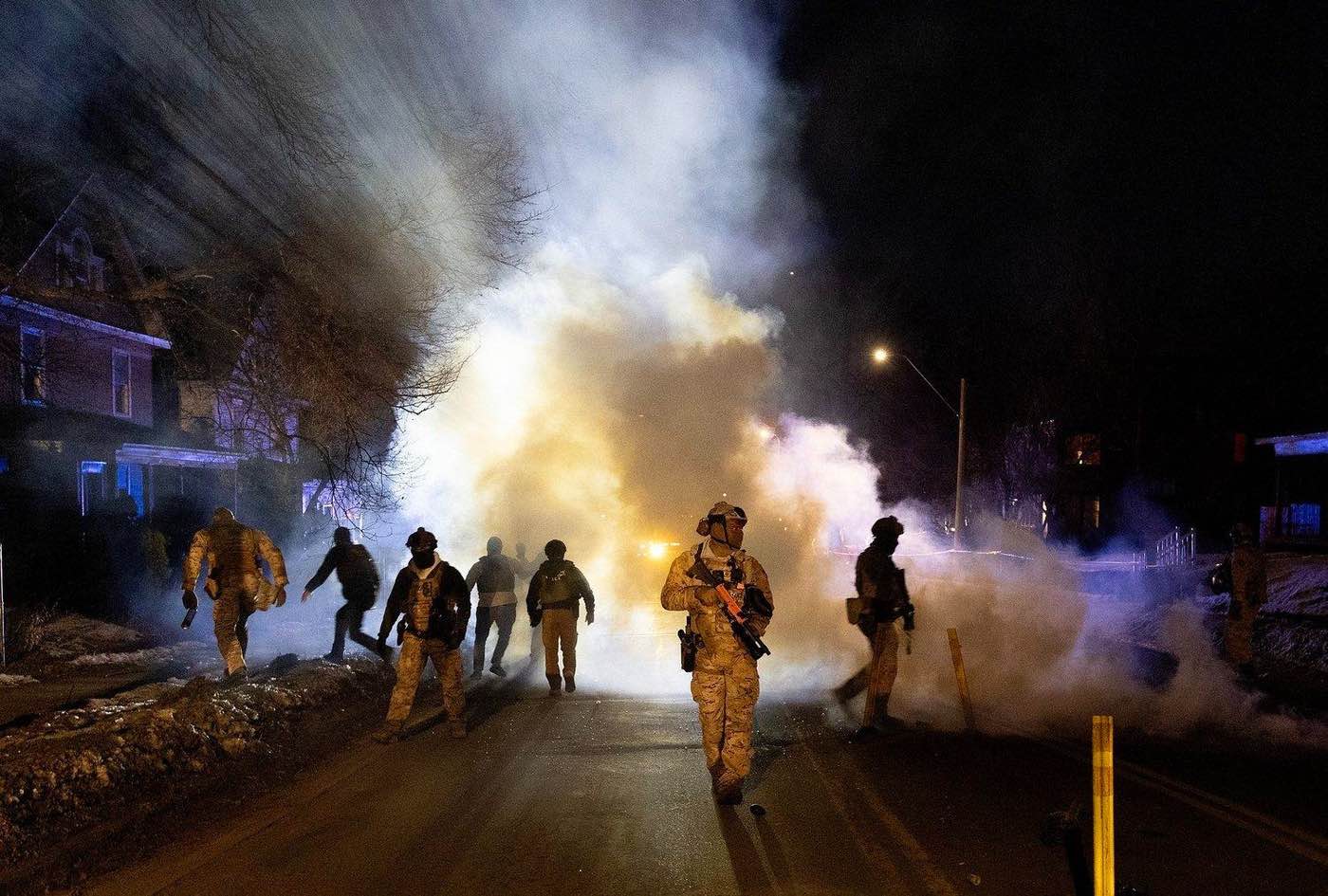
Those who choose to serve tyrants may be able to suppress everything wise and beautiful in themselves, but they will not succeed in destroying wisdom and beauty.
The header photograph was taken by Mark Graves on Sunday, February 1, 2026, at Portland’s ICE facility. It was the second day in a row that federal agents attacked demonstrators with chemical agents.
-
“In Prague we used to say cynically that the ideal political regime was a decomposing dictatorship, where the machine of oppression functions more and more imperfectly, but by its mere existence maintains the nation’s spirit in maximum creative tension.” ↩